Can You Train for HYROX Without a Sled? Alternatives and Their Limits

Your gym has dumbbells, cable machines and treadmills, but no sled or turf lane. That does not mean you have to put your HYROX preparation on hold. It means you need to understand which parts of sled preparation you can develop with the equipment available and which still need hands-on practice.
You can train for HYROX without a sled by developing running fitness, lower-body strength, pulling strength and grip. However, alternative exercises do not reproduce every demand of pushing or pulling a loaded sled. They can support your preparation while leaving specific skills to practise when you get access to the equipment.
If you are new to the event, our guide to the HYROX race format and eight stations explains where the sled push and sled pull fit into the race.
What Makes Sled Training Different?
The sled push and sled pull are separate stations, each covering 50 metres. Both require you to move resistance across the floor, but how you apply force is different.
During the push, you need to establish a useful position against the bars, create traction through your feet and keep the sled moving with controlled steps. During the pull, you need to coordinate pulling effort, body position and rope management within the designated working space.
A squat or cable row can develop part of the strength involved. It cannot tell you how your shoes grip the surface, how difficult the sled is to start or how efficiently you handle the rope.
There is also the running around each station. Finishing a demanding strength effort is one task; settling into your next run without starting too quickly is another.
Sled Alternatives at a Glance
Choose an alternative according to the quality you want to develop. The options below are supporting exercises, rather than interchangeable versions of the race stations.
| Exercise or equipment | What it can help develop | What still needs sled practice |
|---|---|---|
| Squats and split squats | Lower-body strength and control | Forward drive, bar position and traction |
| Trap-bar or other familiar deadlift variation | Leg and hip strength under load | Sustained stepping against a moving sled |
| Cable, dumbbell or suspension rows | Pulling strength and trunk control | Rope handling and whole-body sled-pull coordination |
| Farmers carries | Grip endurance and carrying capacity | Repeatedly gripping and gathering a rope |
| Uphill walking or running | Conditioning during uphill locomotion | Pushing an external load across the floor |
| Purpose-built treadmill sled mode | Resisted stepping against a supported position | Moving a sled, changing direction and handling a rope |
How to Prepare for the Sled Push Without a Sled
Start with lower-body exercises you can perform consistently and progress with good control. You do not need to turn every strength session into a high-repetition circuit.
Build Lower-Body Strength
Squats, split squats and a suitable deadlift variation give you ways to train your legs and hips with progressively challenging resistance. Choose variations that match your experience and the equipment you have.
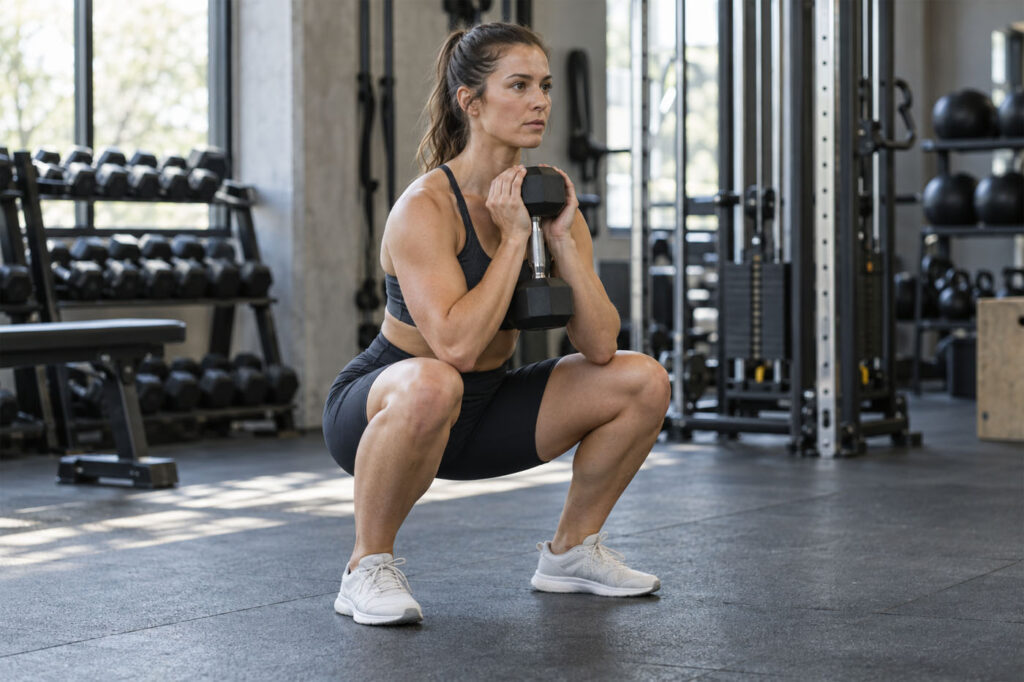
For example, a goblet squat may be a practical starting point if you train with dumbbells. A trap-bar deadlift may suit someone already familiar with that movement. Neither needs to look like a sled push to have a useful place in your strength training.
Use a load that allows repeatable technique. When the exercise becomes consistently manageable, make a small adjustment to the load or repetitions rather than increasing everything together.
Keep Running and Conditioning in the Plan
Uphill walking or running can provide a conditioning option when you have no sled. Choose a gradient and effort that allow you to maintain your normal movement without hanging onto treadmill rails.
The limitation is specific: moving your body uphill does not reproduce pushing a loaded sled across carpet. Treat it as conditioning, and keep dedicated running in your programme rather than replacing all your runs with steep treadmill work.
How to Prepare for the Sled Pull Without a Sled
The sled pull involves more than arm strength. You need to apply pulling force while maintaining a useful position, then manage the rope as the sled approaches.
Develop Controlled Pulling Strength
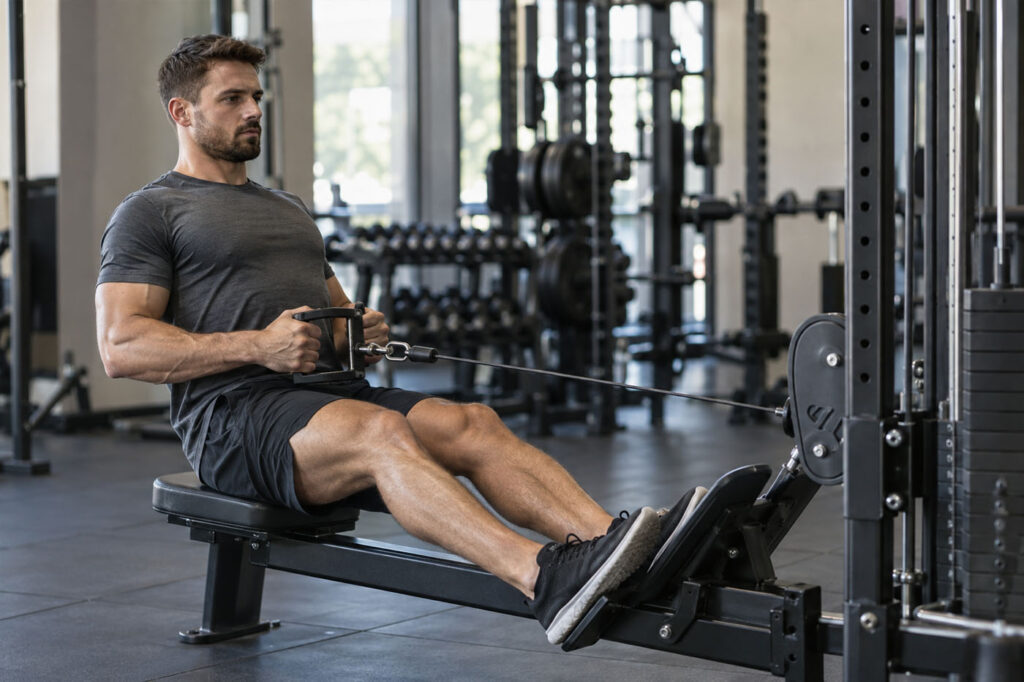
Seated cable rows, dumbbell rows and suspension rows offer accessible ways to train pulling strength. Choose a variation you can control through its intended range without jerking the weight or changing your position to finish each repetition.
Rows can contribute to your preparation, but they leave a coordination gap. A cable handle returns along a predictable path; a sled rope needs repeated gripping, gathering and repositioning.
Give Grip Work a Clear Purpose
Farmers carries can develop your ability to hold a load while moving. They also give you practice for another HYROX station, making them useful when training time is limited.
Use a clear walking route and a load you can carry with control. End the effort before your grip becomes unreliable. Carrying handles and managing a rope feel different, so do not assume that improving one has fully prepared you for the other.
When you gain access to the equipment, use our HYROX station guides to identify the movement skills you still need to practise.
Can a Treadmill Sled Mode Replace Sled Training?
Some treadmills have a purpose-built mode that lets you drive the belt against resistance. This can provide a resisted stepping exercise without needing a turf lane.
For example, Peloton describes its Tread+ Sled Mode as adding resistance to the belt while Free Mode allows the user to power it manually. Availability depends on the supported equipment, software and market, so check the instructions for the machine you actually use.
A treadmill sled mode still changes the task. Your body stays in approximately the same place while the belt moves underneath you. You do not move a sled across the floor, practise its turnaround or gather a pulling rope.
Use treadmill resistance as a setting for that machine, rather than converting it into a HYROX sled load. Matching a displayed number does not establish that the forces, surface or movement demands are equivalent.
Only use a treadmill for resisted pushing when the manufacturer explicitly supports that function. Switching off an ordinary treadmill does not automatically make it suitable for manual sled-style work.
Why Matching the Weight Is Not Enough
A weight on a cable stack, a treadmill resistance setting and the total mass of a sled describe different things. There is no universal conversion that makes them equivalent training loads.
Even two sleds loaded with the same total mass can feel different on different surfaces. Friction, sled construction and shoe traction affect how difficult it is to start and sustain movement.
Record the setup you use and compare your progress under similar conditions. With an alternative exercise, track that exercise’s load, repetitions or duration. With a sled, also note the surface, distance and equipment.
A heavier cable row or faster treadmill effort can show progress in that task. It does not provide a reliable prediction of your race-day sled time.
How to Fit Alternatives Into Your Training Week
Start by checking what your current programme already contains. If you already squat, row and carry regularly, you may have useful supporting work in place. Adding another complete circuit could duplicate it.
- Use strength sessions for strength: place suitable lower-body and pulling exercises within your existing sessions.
- Protect dedicated running: keep space to develop running consistency without making every run follow heavy leg work.
- Count resisted treadmill work as training: a challenging sled-mode effort adds workload even if it happens after your usual run.
- Replace work when appropriate: when you add a sled session, review which alternative exercises it can take the place of.
Our HYROX training foundations can help you organise running, strength, station practice and recovery within the same week.

Can You Practise Running After Stations Without a Sled?
You can practise the transition from functional work into running using familiar exercises and a manageable workload. The purpose is to notice how your effort and pacing change when the run begins with some fatigue.
For example, a controlled carry or a small set of familiar lower-body exercises can precede a short run. Keep enough reserve to run with control, and adjust the preceding work if it leaves you unable to settle into a manageable effort.
This is general practice for running after exercise. It does not reveal exactly how your legs will respond to the race sled, and there is little value in chasing exhaustion simply to make the session feel more specific.
If you build a rehearsal with substituted stations, label those substitutions clearly. Our HYROX simulation guide explains how to approach a rehearsal and record useful observations beyond the finishing time.
What to Practise When You Finally Get a Sled
Use your first opportunity to learn the equipment before turning the session into a test. A coached visit can help you identify practical issues that alternative exercises cannot show.
- Starting the push: find a position against the bars that lets you apply force and move with control.
- Foot traction: check whether your shoes grip the training surface when resistance increases.
- Rope handling: practise gripping, gathering and arranging the rope without creating tangles or stepping on it.
- Movement standards: learn the current requirements for completing each length and staying within the working area.
- Pacing and the next run: once the movements are familiar, practise finishing a controlled sled effort and settling into running.
Begin with manageable resistance and build from what you can perform well. There is no fixed number of visits that guarantees readiness; the useful question is whether you can execute the task consistently under conditions appropriate to your preparation.
Make Progress With the Equipment You Have
Limited sled access does not have to stop your training. Running, progressive strength work, pulling exercises and carries give you practical ways to develop while you arrange opportunities to practise the stations themselves.
Choose each alternative for a clear purpose, track progress in that exercise and keep the remaining skill gaps visible. When sled access becomes available, use it to learn the push, pull and transitions that your regular gym equipment cannot reproduce.
← Back to the Blog