HYROX rowing guide: stroke technique and 1,000 m pacing

Learn the order of the rowing stroke, make the recovery calmer and practise a pace that still leaves something for the next run.
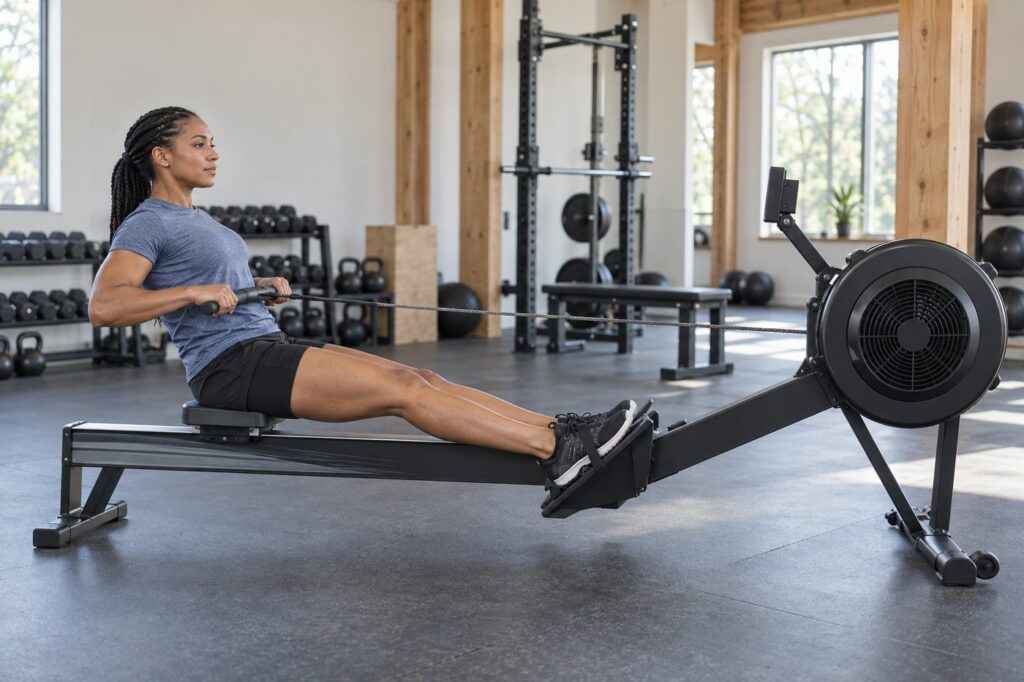
The HYROX row is a useful place to be deliberate. A busy-looking stroke is not necessarily an effective one, and an isolated rowing personal best is not a complete race plan. Start with the sequence, then decide what effort you can use without losing it.
Race requirements at a glance
Singles: 1,000 m. Remain seated until the distance is complete and a judge clears you.
Brief reminders checked on 8 September 2026. Read the 2026/27 singles standard for the full requirements. Other formats have their own rules.
Give the stroke a clear order
On the drive, press with your legs, open through your hips and then bring the handle towards your lower ribs. On the recovery, reverse that order: send the hands away, hinge forwards and then bend the knees. Allow the handle to clear your knees before sliding towards the next stroke.
Keep your wrists comfortable and your shoulders relaxed. Avoid pulling with your arms before your legs have contributed, or racing the seat forwards into the next catch. Concept2’s rowing technique guide provides a visual reference for the positions.
Common mistakes to watch for
- Rushing the recovery. Give yourself time to organise the next drive.
- Pulling harder when the sequence breaks. Lower the effort and recover the order first.
- Ignoring the foot setup. Find an adjustment that feels secure before starting the main session.
Practise three controlled blocks
For adults already comfortable rowing, begin with easy movement and light strokes, then try 3 × 3 minutes at a comfortable effort with 90 seconds of recovery. Spend the first minute of each block on stroke order and the next two on maintaining it.
Record the average split, stroke rate and how the recovery felt. These notes help you distinguish a more controlled effort from simply moving faster. If you cannot keep the sequence, shorten the blocks to two minutes or complete fewer of them. Stop if rowing causes pain.
Progress only after the session feels repeatable. You might add a minute to one block or use a short run afterwards on a different day. Keep the new demand small enough that you can still concentrate on the stroke.
Make a plan for the middle of the row
It is easy to focus on the opening strokes and the finish. Use practice to decide what the middle should feel like. A steady breathing pattern and a sequence you can maintain give you something to return to when the monitor becomes distracting.
For a later combination session, row a controlled interval and follow it with an easy run. Compare the whole effort across similar sessions. If a slightly faster row leaves you struggling to get moving afterwards, reconsider that target rather than judging success from the rowing split alone.
Record settings, but do not worship them
Use a familiar setup and note it in your training log. When you change a setting, make the comparison at a manageable effort. Concept2 explains the difference between airflow settings and how hard you work in its damper guide.
Common rowing questions
Is there a best stroke rate for everyone?
Use a rate at which your technique remains organised. A number copied from a faster athlete may simply make you rush. Instruction and practice can help you find a useful range for your own rowing.
Should I test 1,000 m every week?
A distance test can be useful at selected points, but it need not replace technique work. Choose the session according to what you need to learn and how it fits with the rest of your week.
← Back to the Blog